01 / 01
Made with xavior.ai

1937 — Present

Ed
Ruscha

Artist. Word man. Los Angeles.

Painter, printmaker, photographer, and one of the defining figures of American Pop Art.

Origins

Oklahoma Boy
Goes West

Born December 16, 1937 in Omaha, Nebraska. Raised in Oklahoma City. At 18 he drove Route 66 to Los Angeles — a journey that would define his entire artistic vision.

Enrolled at the Chouinard Art Institute (now CalArts) in 1956. By the early 1960s he was a fixture of the emerging LA art scene.
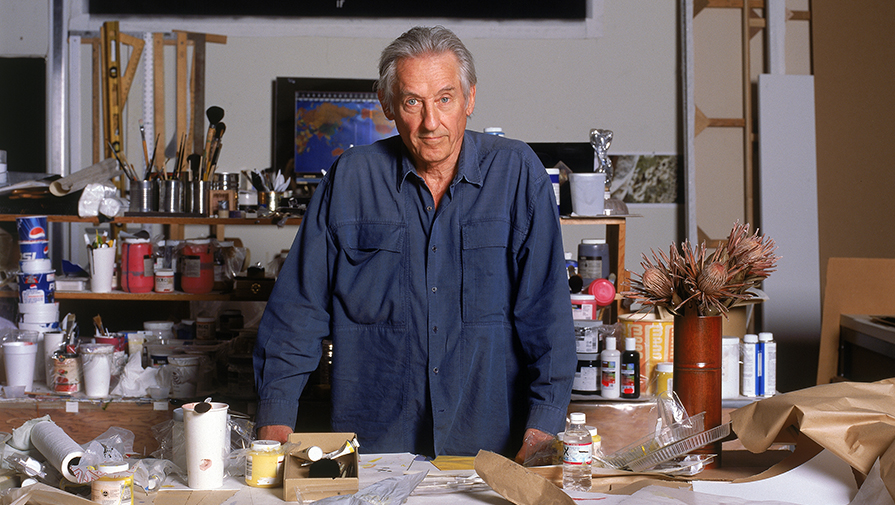
Ed Ruscha

The Signature Move

Words
As Art

Ruscha took ordinary words — HONK, OOF, SPAM, ACE — and painted them large, flat, and deadpan on canvas. Neither illustration nor abstract art: something completely new.

"I am not a sign painter," he insisted. "Words have weight."

Iconic Work, 1966

Standard Station,
Amarillo, Texas

Standard Station, Amarillo, Texas by Ed Ruscha

A cropped, raking-angle view of an Enco station — heroic, cinematic, and utterly banal. The quintessential statement on American roadside culture and the aesthetics of commerce.

Invented a Medium

The Artist
Book

In 1963, Ruscha self-published Twenty-Six Gasoline Stations — photographed on Route 66, cheaply printed, sold for $3.50. It changed what a book could be.

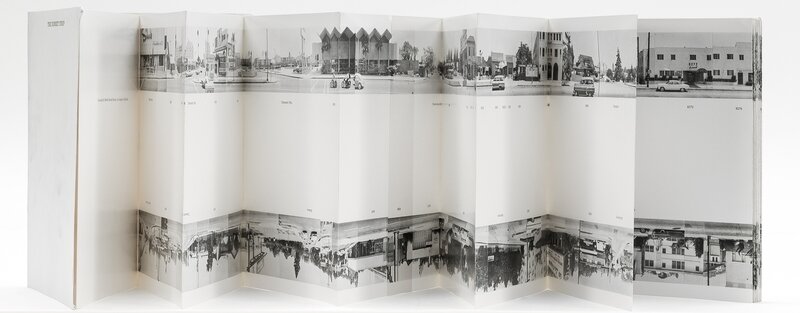
  • Every Building on the Sunset Strip (1966) — a 25-foot accordion fold
  • Thirtyfour Parking Lots (1967) — aerial photography
  • Nine Swimming Pools (1968)
Every Building on the Sunset Strip

The Muse

Los
Angeles

"Los Angeles is a large city-like area surrounding the Beverly Hills Hotel."

— Ed Ruscha

Photography & Documentation

He documented
everything ordinary.

Gas stations. Parking lots. Swimming pools. Sunset Strip storefronts. Where other artists sought drama, Ruscha found poetry in the utterly mundane — the overlooked infrastructure of American daily life.
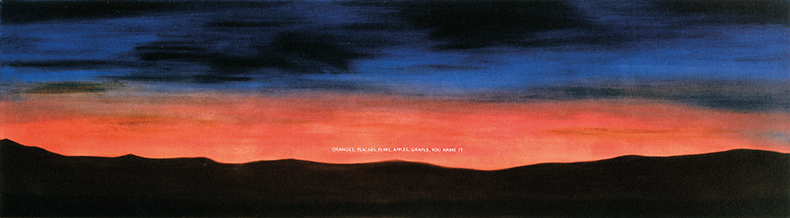
Ed Ruscha work

Pop Art Context

Not New York.
Los Angeles Pop.

While Warhol and Lichtenstein defined the East Coast movement, Ruscha built an entirely separate West Coast sensibility — drier, more ironic, more cinematic. Cars, highways, sprawl, sun.

1963
First artist book published
16+
Artist books in his catalogue
60+
Years of continuous practice

Material Experiments

He painted with
gunpowder.
Blood. Eggs.

In the 1970s and 80s, Ruscha pushed his word paintings into unconventional territory — using organic and industrial substances as pigment, making the medium itself part of the message.
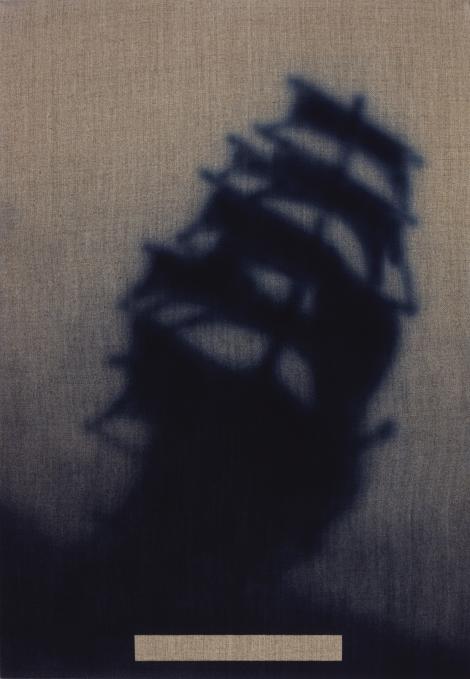
Ed Ruscha painting

Recognition

The World
Caught Up.

  • Represented the U.S. at the Venice Biennale (2005) — the highest honor in contemporary art
  • Major retrospective at MoMA, New York (2023–24): Ed Ruscha / Now Then
  • Works in the permanent collections of the Getty, LACMA, MoMA, Tate, and the Louvre
  • Named one of the most influential artists of the 20th century by virtually every major institution

In his own words

"I've always felt that language and words are the most powerful force I can manipulate — more powerful than any image."

— Ed Ruscha

Legacy

He made
America
see itself.

Gas stations, parking lots, highway signs — Ruscha elevated the vernacular landscape of postwar America into high art without winking at it. The deadpan was the point. It still is.

Made with xavior.ai